
 English
English
English
 German
 Slovenian
 Croatian
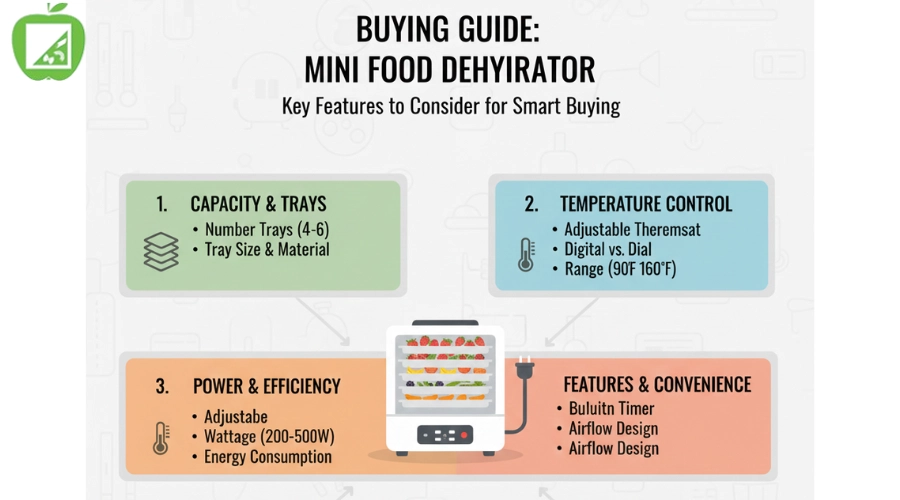
Are you tired of wasting food or looking for a healthy way to preserve fruits, vegetables, and meats? A mini food dehydrator might be the perfect kitchen gadget for you. These compact devices remove moisture from food, extending shelf life and creating nutritious snacks like dried fruits or jerky. But with so many options on the market, choosing the right one can feel overwhelming. This comprehensive buying guide will walk you through the essential factors to consider before purchasing a mini food dehydrator, ensuring you get a device that fits your needs, budget, and lifestyle. Let's dive in and make an informed decision.
Mini food dehydrators are smaller versions of their full-sized counterparts, designed for home use with limited space. They typically dehydrate smaller batches, making them ideal for individuals, couples, or small families. Unlike large commercial models, minis are portable, energy-efficient, and often more affordable. Before buying, think about your usage: Do you want to dehydrate herbs for teas, make fruit leather for kids, or preserve garden produce? Knowing your goals will help narrow down options.
The key advantage of a mini dehydrator is its versatility. You can dry everything from apples and bananas to beef jerky and herbs. However, they aren't suited for large-scale operations. If you're planning to dehydrate bushels of produce, opt for a larger model. Mini versions usually range from 4 to 10 trays, with a footprint of about 12-18 inches in diameter.
When shopping for a mini food dehydrator, focus on features that impact performance, safety, and convenience. Here's what to look for:
Capacity is crucial for determining how much food you can dehydrate at once. Mini dehydrators often hold 4-8 trays, each accommodating 1-2 pounds of food. Consider stackable trays for easy expansion some models allow you to add more trays as needed. Vertical airflow designs ensure even drying by circulating air from bottom to top, preventing soggy spots. Check the tray material; BPA-free plastic or stainless steel is preferable for food safety and durability.
Precise temperature control is essential for different foods. Look for dehydrators with adjustable settings ranging from 95°F to 160°F. Low temperatures (around 95-115°F) are ideal for delicate items like herbs and flowers, while higher ones (135-160°F) work for meats and vegetables. Digital controls with LCD screens offer accuracy and ease of use compared to manual dials. Some advanced models include presets for common foods, saving you time and guesswork.
A built-in timer prevents over-drying, which can ruin your snacks. Opt for models with timers up to 24-48 hours, and an auto shut-off function for safety. This is especially important if you're dehydrating overnight or while away. Imagine coming home to perfectly dried mangoes instead of charred ones peace of mind is priceless.
Durability matters. Choose dehydrators made from high-quality materials like food-grade plastic or stainless steel. The motor should be quiet and efficient, with a warranty of at least 1-2 years. Check for easy-to-clean parts; removable trays and dishwasher-safe components simplify maintenance. Avoid models with cheap plastic that might warp or crack over time.
Mini dehydrators are generally quiet, but some can hum loudly. If noise is a concern, read reviews for decibel ratings. Energy efficiency is another factor look for models with low wattage (around 200-500 watts) to keep electricity bills down. Many minis use less power than ovens, making them eco-friendly.
User-friendliness is key for beginners. Features like intuitive controls, clear instructions, and quick-assembly trays make a big difference. Cleaning should be hassle-free; models with non-stick surfaces or removable parts are winners. Some dehydrators come with mesh screens for small items like herbs, adding versatility.
Extras can enhance value. Consider dehydrators with fruit roll-up sheets for making leather, jerky racks, or recipe books. Bluetooth connectivity or app integration is a bonus for tech-savvy users, allowing remote monitoring. Warranty and customer support are also important reputable brands offer responsive service.
Mini dehydrators come in two main types: stackable and shelf models. Stackable ones have trays that stack vertically, promoting even airflow. Shelf models feature fixed shelves, which might be easier to load but less flexible. Round dehydrators are compact and space-saving, while square ones offer more tray space. Choose based on your counter space and drying needs.
Prices for mini food dehydrators range from $30 to $150. Entry-level models are affordable but may lack advanced features. Mid-range options ($50-100) balance quality and extras, while premium ones ($100+) include digital controls and warranties. Factor in long-term savings a reliable dehydrator can pay for itself by reducing food waste. Don't skimp on quality; cheap models often break down quickly.
Researching brands builds trust. Nesco is a top choice for its reliable stackable designs and even heating. Excalibur offers high-end minis with superior airflow. Cosori and Presto provide budget-friendly options with good reviews. Check sites like Amazon or Best Buy for user feedback, focusing on ratings for durability and performance.
Once you have your dehydrator, maximize its potential. Slice food evenly for uniform drying, and rotate trays if needed. Store dried foods in airtight containers to maintain freshness. Experiment with recipes try dehydrating kale chips or yogurt for healthy treats. Safety first: Never leave it unattended, and keep it away from flammable materials.
Investing in a mini food dehydrator is a smart move for health-conscious cooks. By prioritizing capacity, temperature control, ease of use, and build quality, you'll find a model that meets your needs without breaking the bank. Remember, the best dehydrator is one you'll use regularly. Take your time comparing options, read reviews, and consider your lifestyle. With the right choice, you'll enjoy homemade snacks that are nutritious, cost-effective, and delicious.