
 English
English
English
 German
 Slovenian
 Croatian
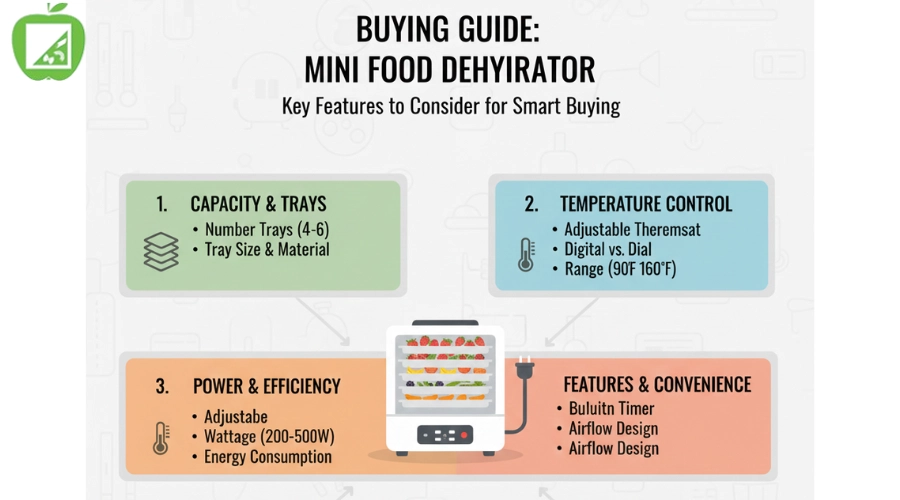
There's a quiet revolution happening in kitchens around the world and it fits neatly on your countertop. More people than ever are turning to a small food dehydrator to take control of what goes into their food, cut down on waste, save money, and enjoy genuinely nutritious snacks without a single artificial preservative in sight. The best part? You don't need a large machine, a dedicated food processing space, or a commercial budget to get started.
Whether you live in a studio apartment, cook for one or two people, love outdoor adventures, or simply want to try food dehydration before scaling up, a small food dehydrator delivers impressive, professional-quality results without taking over your kitchen. In this guide, we'll explore why small is mighty, what to look for when choosing between a compact food dehydrator and a portable food dehydrator, and how the right unit no matter its size can genuinely transform the way you preserve and enjoy food.
One of the biggest misconceptions about food dehydration is that bigger machines produce better results. In reality, the quality of dehydrated food has nothing to do with the physical size of the machine it comes down to airflow consistency, temperature precision, and drying time. A well-engineered small food dehydrator with proper fan placement and accurate temperature control will produce dried fruits, vegetables, herbs, and jerky that are just as nutrient-dense, flavourful, and beautifully textured as anything made in a large commercial unit.
What a small machine trades in volume, it more than compensates for in efficiency, affordability, and convenience. For the everyday home user, these trade-offs are not just acceptable they are genuinely ideal.
A compact food dehydrator is the sweet spot for most home users. Slightly larger than an entry-level mini unit, compact models typically offer between 4 and 10 trays, providing enough surface area to handle a meaningful batch of food without overwhelming your available kitchen space.
Think about the foods you buy fresh but frequently watch go to waste before you can use them all bananas that over-ripen, herbs from the garden, a punnet of strawberries, a glut of mushrooms from the market. A compact food dehydrator transforms all of these from potential bin fodder into shelf-stable, flavourful ingredients you can enjoy for months.
Dried banana chips, herb powders, sun-dried tomatoes, mushroom flakes, and apple rings are just a few of the everyday results a compact machine can produce with minimal effort. Load the trays, set your temperature, and let the machine do the work while you get on with your day.
One of the most compelling reasons to choose a compact food dehydrator is how little real estate it requires. Most compact models fit easily on a standard kitchen shelf or countertop, and many are designed with stackable tray systems that let you expand capacity when needed without permanently occupying extra space.
This makes a compact food dehydrator the ideal appliance for smaller kitchens, apartments, shared living spaces, or anyone who values a clutter-free home environment. When you're done, it stores away cleanly without dominating your storage space.
Compact food dehydrators typically consume between 300 and 600 watts a fraction of what a traditional oven uses. Running one for an eight-hour drying cycle costs only a small amount in electricity, making it one of the most economical preservation methods available. Over time, the savings from dehydrating seasonal produce in bulk rather than buying expensive store-dried alternatives add up to a meaningful difference in your household food budget.
If a compact food dehydrator is built for the home kitchen, a portable food dehydrator is built for life on the move and it opens up a whole new world of possibilities.
Hikers, campers, backpackers, and outdoor enthusiasts have long understood the value of dehydrated food. It is lightweight, doesn't require refrigeration, retains its nutritional value, and can be rehydrated in minutes with just boiling water. A portable food dehydrator allows you to prepare your own customised trail meals, dried snacks, and energy-dense foods at home before any adventure saving significantly compared to commercially pre-packaged options while putting you in complete control of ingredients and flavour.
Dehydrated food removes up to 75–90% of its water weight, meaning a full day's worth of nutrition can be packed into a fraction of the space and weight of fresh food. For anyone who has ever struggled to pack enough food into a hiking pack without sacrificing weight limits, a portable food dehydrator is genuinely life-changing.
The appeal of a portable food dehydrator extends well beyond outdoor adventure. It's equally useful for anyone who travels frequently and wants to carry homemade healthy snacks, families who want nutritious on-the-go options without relying on processed convenience foods, and anyone living or working in a space without a full kitchen setup.
A portable unit is also a smart choice for market vendors, small food entrepreneurs testing product ideas, or farmers who want to begin processing their own produce on a small scale before investing in a larger system.
When choosing a portable food dehydrator, prioritise:
Whether you choose a compact or portable food dehydrator, certain features separate a reliable machine from a frustrating one. Here's what genuinely matters:
Temperature range: Different foods require different drying temperatures. Delicate herbs and flowers dry best at lower temperatures (around 35°C), while fruits sit comfortably in the 55–60°C range, and meat jerky requires higher heat closer to 70°C to dry safely. A small food dehydrator with a wide, adjustable temperature range gives you the flexibility to handle any ingredient correctly.
Even airflow: Hot air must circulate consistently across every tray for uniform results. Look for rear-mounted or side-mounted fans rather than base-mounted fans, which can create uneven drying and require frequent tray rotation.
Timer function: The ability to set an automatic shut-off timer is essential. Drying cycles can run anywhere from 4 to 24 hours, and a built-in timer means you are never tied to the machine.
Easy-clean trays: Mesh or stainless steel trays that are dishwasher-safe make the post-drying clean-up effortless, which matters when you're using the machine regularly.
Humidity control: More advanced compact and portable models include humidity monitoring alongside temperature control a combination that takes the guesswork out of achieving the perfect result for different food types and moisture levels.
A small food dehydrator whether compact or portable is the right choice if you:
There is a certain irony in the fact that the most transformative food preservation tool in many households is also the smallest appliance on the shelf. A small food dehydrator, compact food dehydrator, or portable food dehydrator may not look impressive at first glance but what it produces tells a completely different story.
Nutrient-rich dried fruits. Intensely flavoured herb powders. Perfectly chewy beef jerky. Lightweight, shelf-stable meal components for your next hiking trip. All of it made at home, with ingredients you choose, at a fraction of the cost of store-bought alternatives.